





Email records, ready when the question arrives

Email Archiving Software That Makes Business Email Searchable, Reviewable, and Retrievable

Keeping a copy of an email is only the beginning. Patrina helps regulated firms preserve business email in an organized archive, quickly search the communications that matter, support review workflows, and retrieve focused records when an audit, examination, or internal inquiry requires them.

  • Built for financial-services workflows
  • Structured around accountable follow-through
  • Configured to fit the firm’s operating model
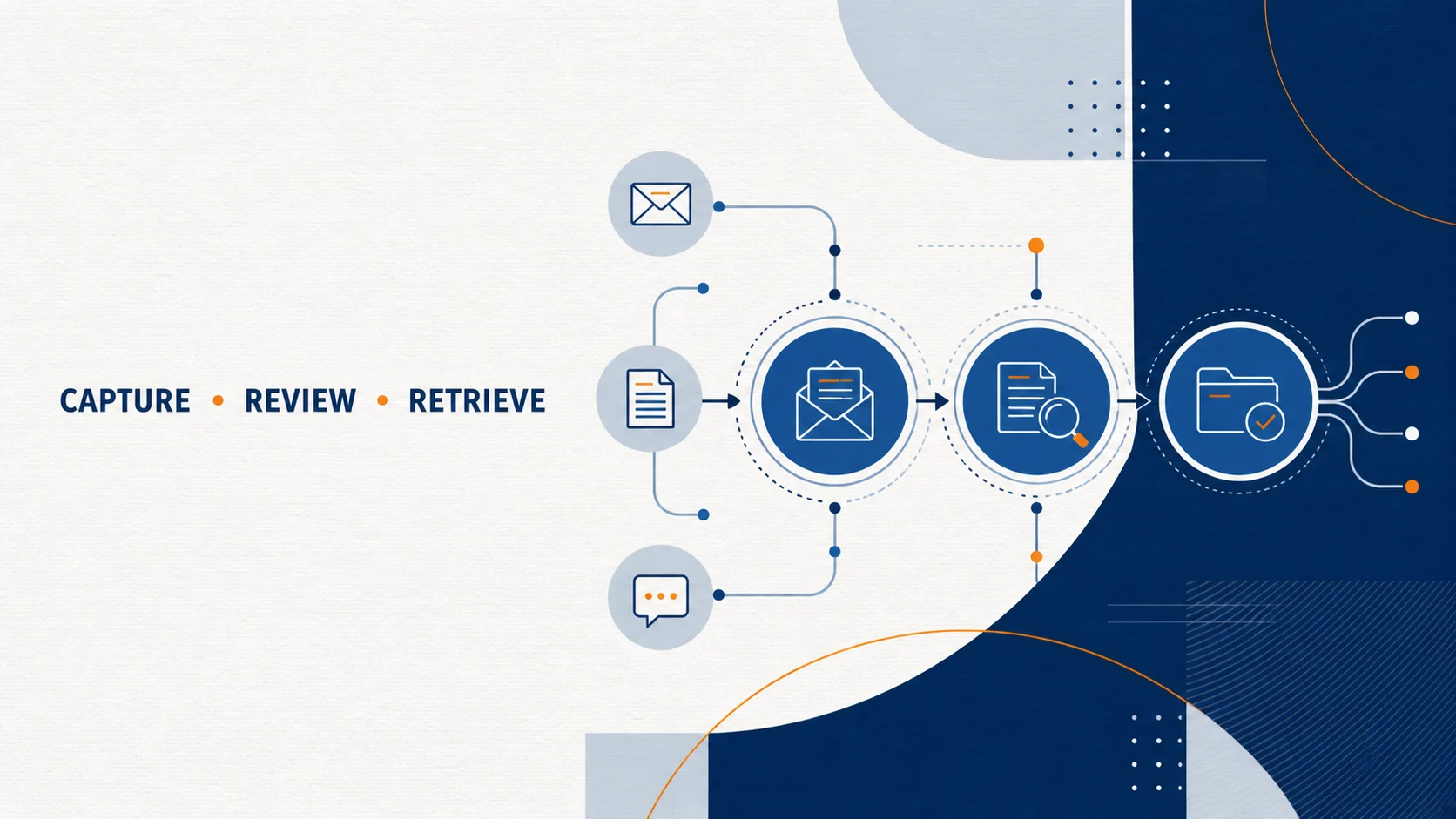
Business communications moving through capture, accountable review and focused retrieval

Financial firms that trust Patrina

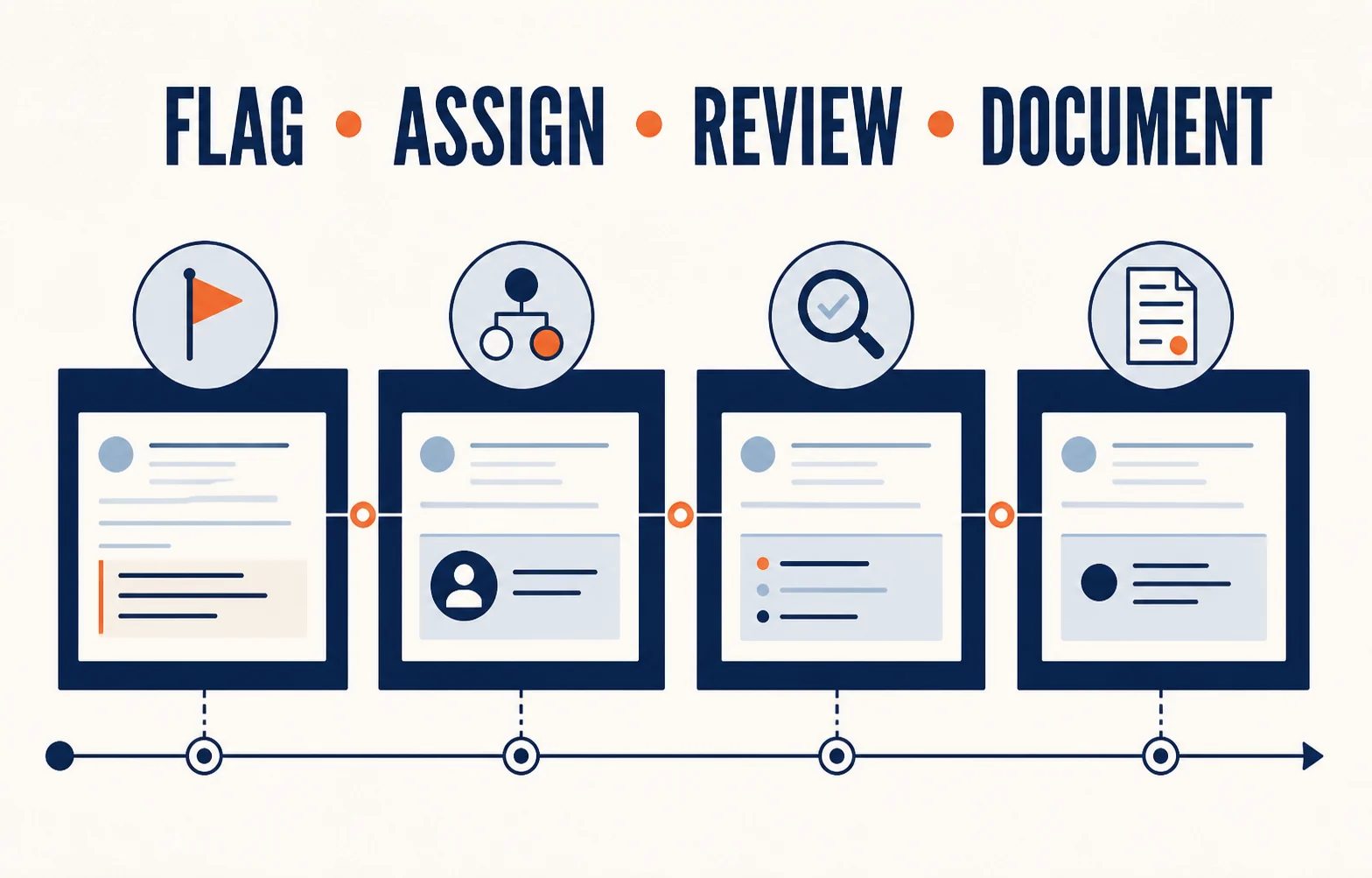
Email governance workflow from policy flag and reviewer assignment to documented disposition
Review governance stays visibleFlags and sampling may surface an email, while assignment, reviewer action and documented disposition show how the firm handled it.

One operating cycle

Make Business Email Easier to Preserve, Review, and Retrieve

Business email becomes a useful record when authorized teams can quickly find the right message, understand its context, and document how it was reviewed.

Patrina’s compliant archiving platform connects email preservation, indexing, search, supervision, access controls, and reporting in one streamlined archiving workflow.

  • Define What Enters the Archive

    Work with Patrina to identify the email environments, users, shared mailboxes, and message types that need to be archived. Patrina also supports legacy email import to bring historical records into the searchable archive.

    A complete source map gives your firm a clear, documented view of what is captured, where it comes from, and which business communications are preserved.

  • Preserve Content and Context

    Preserve business email with the content, timestamps, and metadata needed to search, review, and retrieve each record accurately.

    Patrina supports message verification, time and date serialization, deduplication, and full indexing to keep archived content organized and connected to the search criteria authorized users need.

  • Find Relevant Email Faster

    Use indexed content and saved search criteria to quickly narrow requests by users, dates, and relevant terms. Reusable searches give reviewers a consistent starting point for routine reviews and recurring requests.

  • Turn Archived Email Into Accountable Review

    Create targeted review workflows using flagging criteria, sampling, automated assignments, escalation, access controls, audit trails, and reporting.

    Move selected messages through a documented review process while keeping review activity connected to the archived record. This creates a clear history for supervision, follow-up, and focused retrieval.

See Patrina's email archiving workflow
Search Beyond the MailboxSearch archived business email using focused criteria to quickly identify relevant communications across users and mailboxes
Turn archived email into active supervisionCreate targeted workflows for random reviews, flagged emails, and users under heightened supervision—then track each review through resolution.
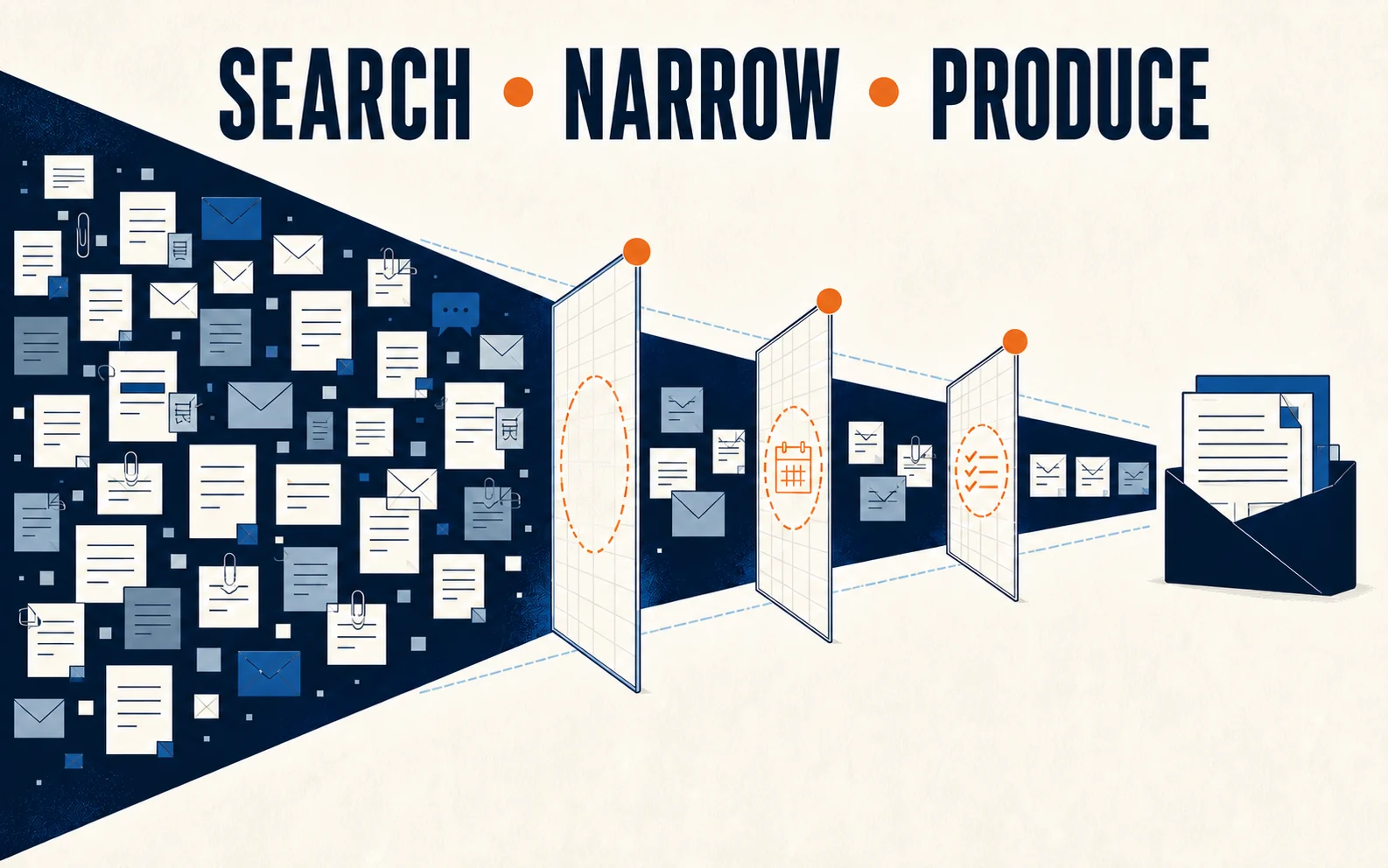
Focus the production setQuickly narrow the archive to the responsive messages and reports needed for an audit, examination, or internal request.

Platform capabilities

Turn Archived Email into a Usable Business Record

01

Make Archived Email Easy to Search

Full indexing makes message content searchable across the archive. Saved and repeatable searches let reviewers refine useful criteria and quickly reuse them for future reviews.

During a demo, test searches using the fields, terms, and ambiguous requests your team encounters in real-world reviews.


02

Flag Messages for Review and Follow-Up

Use customized lexicons to identify messages that match the firm’s review criteria. A match is a review signal—not a determination of a violation.

Flag messages for follow-up so reviewers can distinguish the initial alert from the review, decision, and documented action that follows.

03

Automate Sampling and Review Assignments

Use percentage-based sampling and automated review assignments to create a consistent, repeatable supervisory process.

During a demo, confirm the sampling logic, assignment rules, and notifications support the firm’s intended review workflow.

04

Control Access And Escalation

Limit access to archived email based on reviewer roles, user groups, and responsibilities. Use reassignment and escalation controls to route reviews to the appropriate people.

Map permissions to the firm’s organizational structure so reviewers see only the messages and workflows relevant to their role.

05

Document Review Activity And Reporting

Maintain an audit trail of review activity, including who reviewed, flagged, reassigned, or reported on archived messages.

Use reporting to demonstrate how records were handled and support internal oversight or regulatory requests. During product review, confirm the events captured, available report fields, and export options.

06

Bring Legacy Email Into the Archive

Historical email should not become an invisible second archive. Patrina supports legacy-message import to bring prior records into the searchable archive.

During onboarding, Patrina works with your team to identify the historical email to be migrated, confirm required formats, and establish the appropriate migration approach.

Test Patrina With A Real-World Request

Bring a request your team has handled before—such as a sender and date range, an ambiguous phrase, a departed employee, or messages requiring review.

Use the scenario to test how Patrina searches, controls access, routes reviews, and produces the required records. This also helps identify any deployment details that need to be confirmed.

Request a focused email-archiving demo

Capture coverage

Define What Your Firm Needs to Archive

Start by defining which business messages need to be captured, how long they must be retained, and the search criteria needed to find them later. This establishes the archive requirements before evaluating features, workflows, or dashboards.

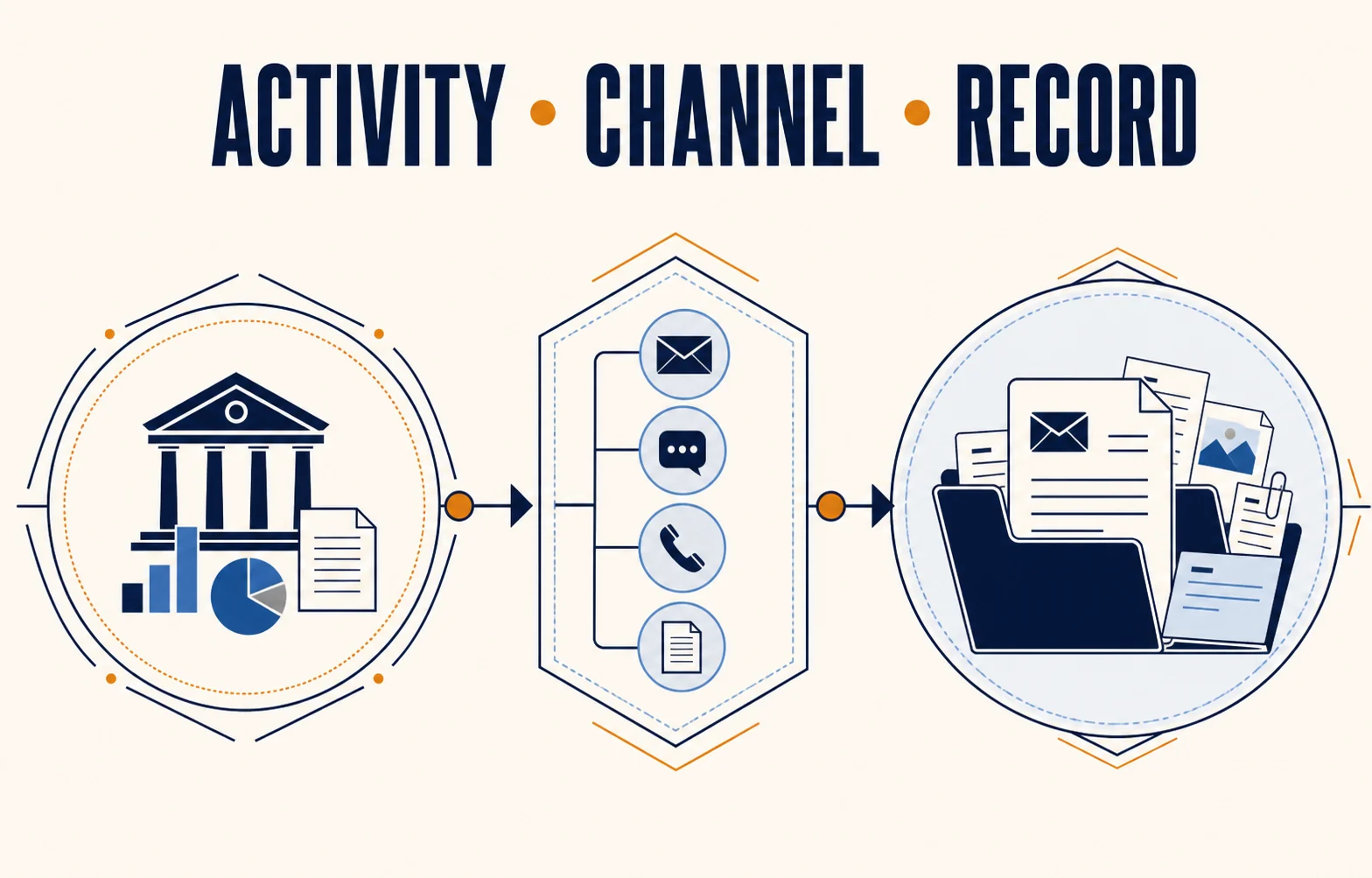
Confirm how the archiver can support your retention requirements and search needs across Microsoft Exchange, Office 365, and Gmail.

Microsoft Exchange and Microsoft 365 Email

Identify the users, shared addresses, and business mail flows that need to be captured.

Then verify how in-scope mailboxes are captured, archived, and monitored, and how the archive handles changes when mailboxes are added, renamed, disabled, or removed.

Google Mail

The firm should control which users and messages are archived rather than relying on individual users to manage their own archives. Patrina works with your team to configure the appropriate users and ensure the right business emails are captured and archived.

Historical and legacy email

An archive evaluation should account for records that predate the new system. Patrina supports legacy email import to help bring historical messages into the archive.

During onboarding, Patrina’s team will work with your firm to identify the historical messages you want to bring into the archive and discuss the required formats and migration requirements.

From message to evidence

Storing emails is easy. Proving an archive meets compliance obligations requires more.

Business communications capture decisions, instructions, representations, approvals, and relationship history.

But the same message can exist in very different states: in a user’s mailbox, in backup storage, under a mail platform’s retention controls, or as a preserved record in a dedicated archive.

For financial services firms, the archive must also restrict the ability to alter or delete preserved email content and maintain the integrity of the original record.

The key is proving that the archive can reliably capture, retain, find, review, and retrieve those records when they are needed.

01

Verify complete capture coverage

A compliant archive must capture every in-scope business message—not simply retain mailbox data or backups.

Verify that messages from approved sources, users, and shared mailboxes enter the archive, and confirm how capture is monitored when users, addresses, or configurations change.

Effective archiving starts with complete source coverage and reliable capture—not simply showing that “email is connected.”

02

Make Archived Email Easy To Find

A request rarely asks for an entire mailbox. It usually targets a person, date range, subject, phrase, attachment, or specific conversation.

Your archive should make those records easy to locate by indexing key message details and content, while allowing teams to refine searches and save useful criteria for repeat requests.

Patrina supports full indexing and saved, repeatable searches—turning archived email into a practical, searchable record rather than passive storage.

03

Turn Search Results Into a Focused Response

Finding relevant messages is only the first step. Teams need to refine results, review responsive records, flag issues, control access, and document the process before producing the final set.

A strong archive supports this workflow from search through review and production, preserving the context needed to understand each message.

With a defined process, compliance, legal, records, and IT teams can respond consistently without reinventing the workflow for every request.

04

Backup, Mailbox Retention, and Archiving Serve Different Purposes

These systems can work together, but they are not interchangeable. Define the role each system plays and what “retention” means within that part of the architecture.

A clear separation helps ensure the firm’s backup, email platform, and archive each support the requirements they are intended to meet.

Bring Patrina the workflow that is hardest to coordinate.

Use a real handoff to evaluate fit, ownership and visibility.

Request a live demo

Real operating events

Evaluate The Archive by the Work it Must Complete

Preserve Email When a User Leaves

An employee, contractor, or executive leaves, but the firm still needs authorized access to their historical business email without maintaining an active production mailbox indefinitely.

IT or email administration, the records owner, legal or compliance, and the manager responsible for the ongoing business relationship.

Confirm the user’s approved addresses and aliases, verify the last successfully archived period, define authorized access, and distinguish between forwarding new business and preserving historical email.

Remove inappropriate access while retaining the archived email under the firm’s approved policy. Then test a search across both the user’s active and departed-user periods to verify continuity and retrieval.

Historical correspondence remains discoverable to authorized users after account ownership changes, without relying on a former employee’s live mailbox as the long-term records strategy.

Offboarding, retention, and access behavior should be configured to the firm’s policies and confirmed during deployment

Email governance workflow from policy flag and reviewer assignment to documented disposition

Rules become workflows

Configure the Archive Around Your Record Requirements

Email is a communication channel, not a single record category. What must be retained, for how long, and under what controls depends on the business activity, content, firm, and applicable requirements.

Start by defining the firm’s record and retention requirements, then configure the archive, policies, and review procedures around that documented map.

Request a live demo

Broker-Dealers and FINRA Member Firms

FINRA Rule 4511 requires member firms to make and preserve required books and records under FINRA rules, the Exchange Act, and applicable SEC rules. FINRA also directs certain records to media and formats that comply with SEC Rule 17a-4.

For qualifying firms, the content and business purpose of an electronic communication can determine whether it must be retained. Firms should therefore map applicable recordkeeping requirements to their specific activities rather than treating every email as the same type of record.

Investment Advisers

Investment advisers follow a different recordkeeping framework, including Advisers Act Rule 204-2 where applicable.

The practical focus is to identify which correspondence, and records must be retained, determine the applicable retention and accessibility requirements, and validate that the archive supports the firm’s specific obligations.

Other Regulated Organizations

Healthcare, commodities, public-sector, and other organizations may have different recordkeeping, retention, privacy, and production requirements. Evaluate Patrina’s archive against the firm’s documented obligations rather than treating any archive as a universal compliance solution.

Regulatory context

Requirements vary by organization, activities, jurisdictions, and applicable rules. This content is general information, not legal advice.

Confirm applicable requirements and product configuration with qualified compliance, legal, and product reviewers.

A practical buying guide

Follow a Message Through the Archive Before Comparing Dashboards

A feature checklist can show that products use the same terminology while hiding differences in capture, preservation, search, review, and retrieval.

Use a representative message and a realistic request to test the complete workflow—from capture and archiving through search, review, and final retrieval.

  1. 01

    Define the Capture Boundary and Its Exceptions

    What evidence shows that every approved source is feeding the archive as designed?

    Document the mail environments, domains, user types, and business mailboxes the firm expects to cover. Confirm how new and departed users are handled, how capture failures are detected, and how the archive verifies that expected content is being received.

    Include shared or nonstandard mailbox types in testing after the vendor confirms support.

  2. 02

    Inspect the Complete Record and Rendered Message

    Which email content and metadata are preserved, indexed, displayed, and exported—and how are exceptions identified?

    Open known messages and inspect the available content and metadata. Test a reply chain and attachment, then verify how the system handles timestamps, senders and recipients, duplicates, message identity, and content that cannot be indexed.

  3. 03

    Map Retention and Preservation to the Firm’s Rules

    Can you demonstrate how the firm’s approved retention schedules and legal holds apply to a known message from ingestion through disposition?

    Use the firm’s actual record categories and schedules rather than relying on a generic “compliant retention” claim. Confirm who can configure or override retention, what happens when a retention period expires, and how preservation controls apply.

    If legal hold is required, test its scope, permissions, and interaction with disposition. A control should be evaluated by how it works within the firm’s process—not simply by whether the feature exists.

  4. 04

    Test Ownership, Permissions and Escalation

    Can the firm reproduce its review hierarchy?

    Create roles that reflect the real organization—archive administrator, compliance professional reviewer, compliance supervisor, and Chief Compliance Officer. Assign a review, flag a message, and escalate it.

    Then verify what each role can access and what the audit trail records at each step.

  5. 05

    Test Search-to-Production and the Exit Plan

    How will the firm access and receive its data during a request, migration, or provider transition?

    Use a realistic request to test search refinement, review, and final output. Then confirm historical import, export formats, turnaround times, migration assistance, fees, and data portability if the firm changes providers.

    Confirm commercial terms and costs in the current agreement rather than relying on website descriptions.

  6. 06

    Start the Demo With Evidence, Not Adjectives

    Bring one known message, one challenging search, and one user-access scenario.

    A strong demo should show how each moves through capture, search, review, permissions, and retrieval. What the vendor can demonstrate is more useful than a feature list alone.

A better evaluation starts with your workflow.

Bring one real client or record journey and ask Patrina to show how the platform supports it.

Evaluate Patrina with your own scenario

Frequently asked questions about email archiving software

Frequently asked questions about email archiving software

Talk to Patrina

Email archiving software preserves business email and organizes it for search, review, retention, and retrieval.

For regulated firms, the archive is one part of a broader recordkeeping process that includes source coverage, retention policies, access controls, supervision, and procedures for producing records. The software supports these processes but does not determine which regulatory obligations apply to the firm.

See Patrina archiving in action

Test Patrina against the records and communications your firm must manage.

Bring a real process to the conversation. A focused demonstration can show the relevant product path, clarify configuration questions and identify what your team should validate next.

  • Walk through a representative workflow
  • Confirm the systems, channels and roles involved
  • Define the next evaluation step with Patrina

    Review Patrina archiving for your firm Book a demo