Email archiving for broker-dealers

Broker- Dealer Email Archiving for FINRA Compliance

Business email is not useful as a record simply because it remains in a mailbox. Broker-Dealers need a defined process for identifying in-scope communications, preserving them in the appropriate electronic recordkeeping system, documenting supervisory activity, and retrieving the records they need.

Patrina brings email preservation, search, supervision, and review workflows together in one archiving environment designed for Broker-Dealers.

  • Archiving designed around regulated recordkeeping workflows
  • Search and review tools for compliance teams
  • Service from a team focused on financial-services records
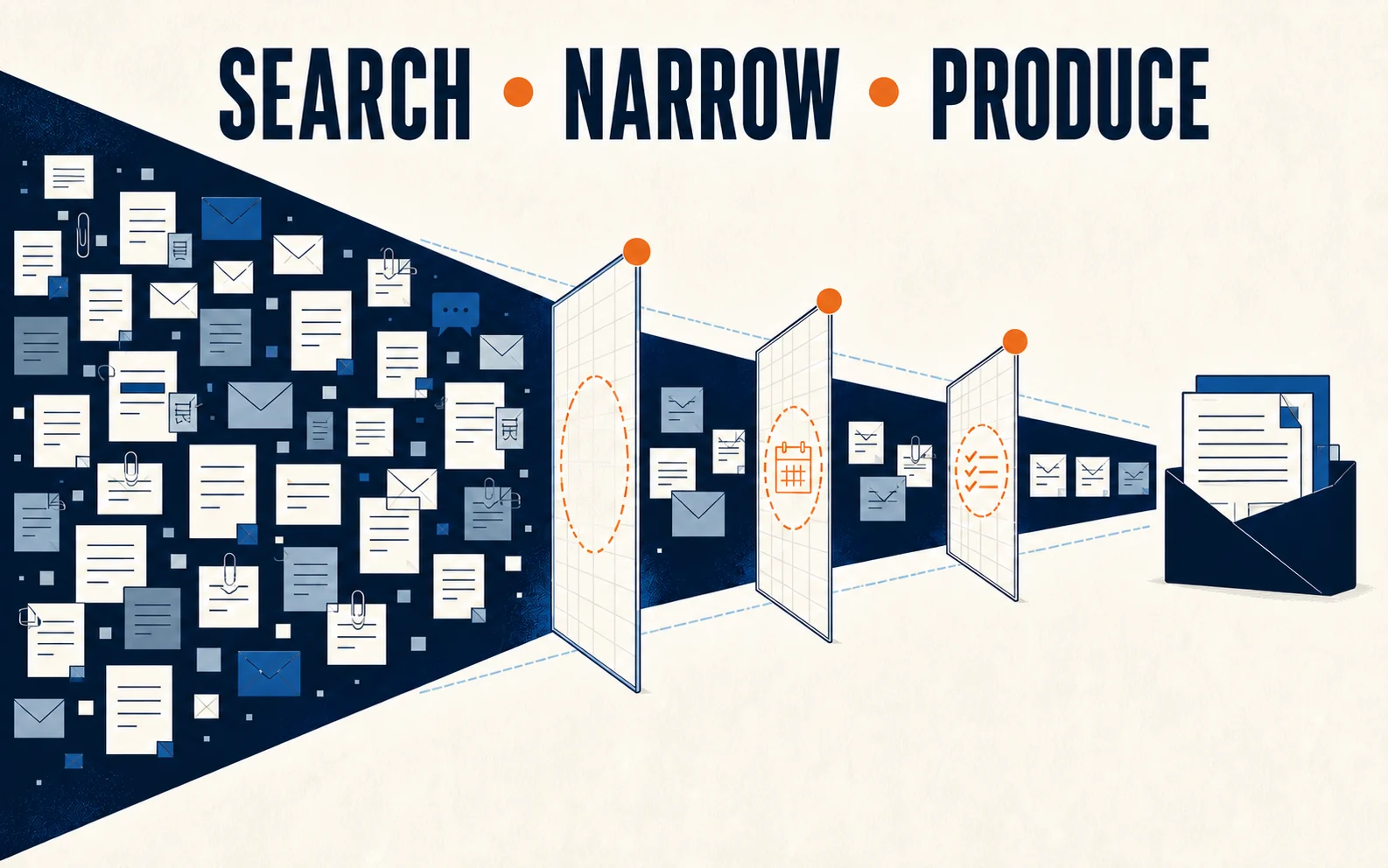
Email archive narrowed from a broad record collection to a focused production set

Financial firms that trust Patrina

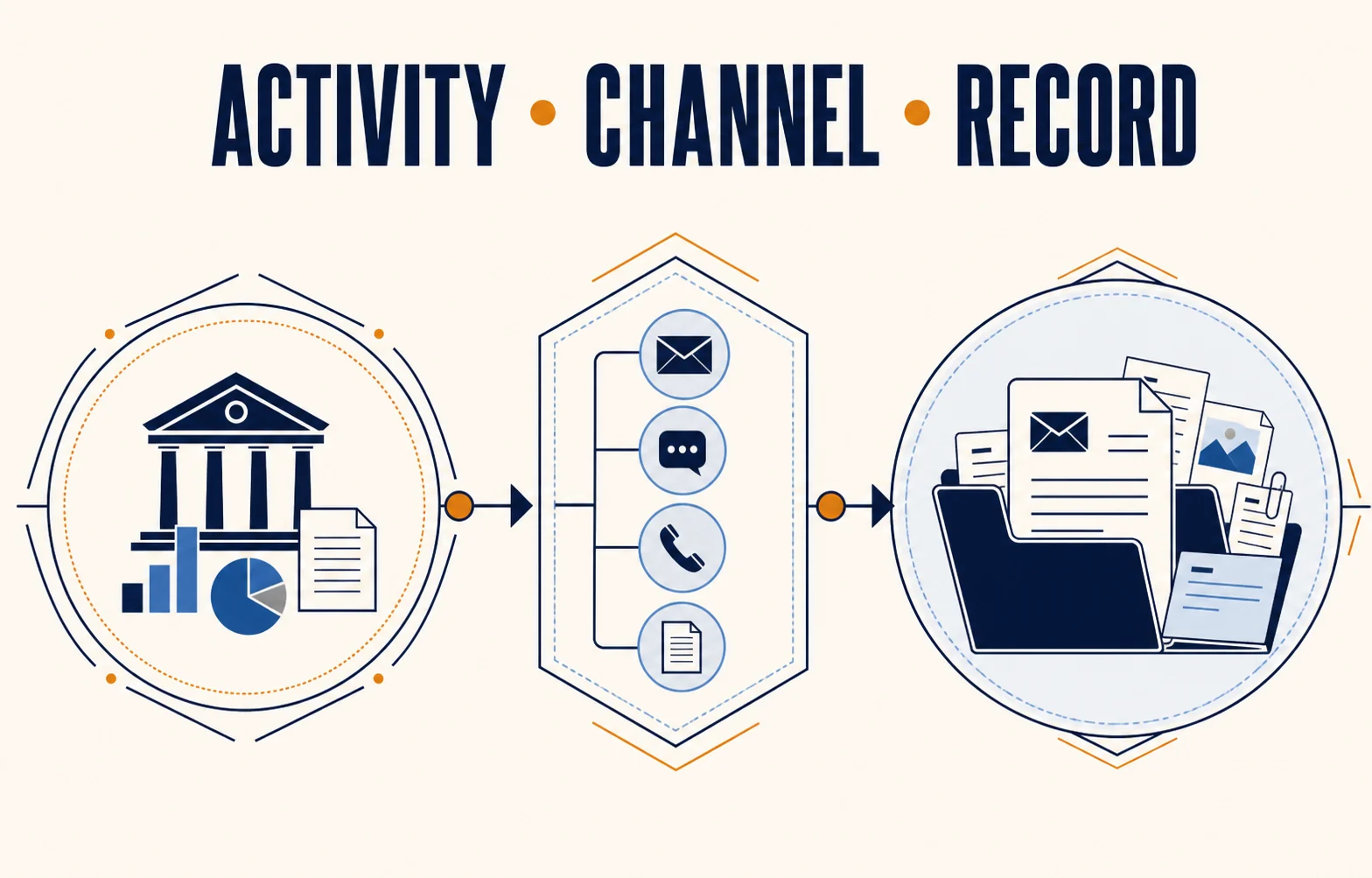
Record map connecting investment-adviser business activity, approved communication channel and retained evidence
Start with the activity that creates the recordMapping broker-dealer activity to its approved channel and retained evidence gives the firm a more practical basis for archive design and supervisory review.

One connected archiving workflow

Make Broker-Dealer Email Searchable and Reviewable

Broker-dealer email can span representatives, branches, shared accounts, and central teams. Patrina’s compliant archiving platform connects preservation and indexing with search, review, access controls, audit trails, and reporting.

This connected workflow helps authorized teams locate business email, route selected messages for supervision, and maintain a clear record of the review activity performed.

  • Connect Email Sources to the Archive

    Patrina can help align supported mail environments, users, and account structures with the archive configuration. Patrina also supports importing historical email into the archive, helping firms bring prior records into the same searchable environment so important business communications are not left behind.

    A defined source map gives operations and compliance a clearer view of which business correspondence is included in the archiving workflow.

  • Preserve Business Email and Make It Searchable

    For broker-dealers subject to SEC Rule 17a-4, electronic records must be preserved in a manner that protects them from alteration or erasure and supports accurate retrieval. Recordkeeping also involves requirements around serialization, time and date information, verification, and the ability to produce usable records.

    Patrina’s archiving approach is designed to preserve business email as searchable records while maintaining the content and associated information needed to verify, review, and retrieve those records.

  • Turn Email Review into a Documented Process

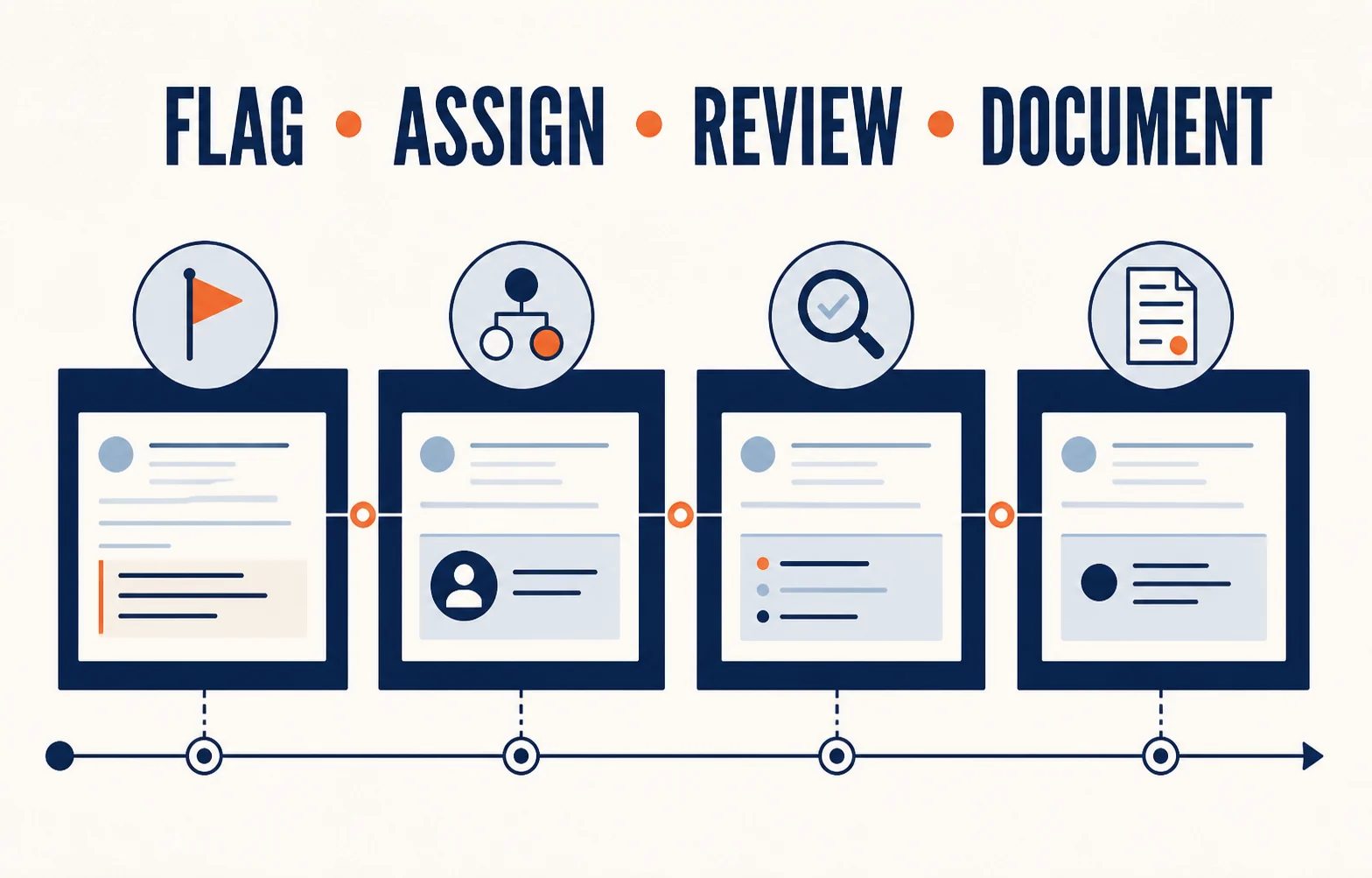
    Search criteria, sampling, lexicons, and assignments help route selected messages for human review. Flags, escalation, and recorded reviewer activity help the team track each item through follow-up and disposition.

    Patrina provides a structured environment for applying the firm’s review policies and maintaining a visible history of the supervisory work performed.

  • Find and Produce the Records That Matter

    Saved searches, access controls, and reporting help authorized teams repeat defined queries and narrow the archive to relevant records. Audit information provides visibility into the search and review activity performed.

    Patrina’s support team can also assist with complex queries and audit support when needed, with any applicable service charges discussed based on the scope of assistance.

See Patrina's broker-dealer email workflow
Preserve With PurposeKeep broker-dealer email within an electronic recordkeeping workflow designed to protect record integrity and provide appropriate access to authorized users.
Review With EvidenceOrganize supervisory reviews so the firm can document who reviewed a communication, when it was reviewed, what was identified, and what follow-up occurred.
Produce With ControlSearch and refine the archive to identify records relevant to a specific request rather than relying on an indiscriminate mailbox export. Define the approval, access, and documentation requirements for each production workflow.

From retention to review

Supporting Every Stage of the Broker-Dealer Email Record Lifecycle

01

Preserve Records with Integrity

Patrina’s archiving platform is designed to handle broker-dealer electronic records in accordance with applicable SEC Rule 17a-4 recordkeeping requirements, including controls for record integrity, verification, time and date information, serialization, and searchable indexing.

02

Find the Records You Need with Full Indexing

Patrina provides full indexing and the ability to save and repeat search criteria, helping authorized users quickly locate defined email populations for supervision, follow-up inquiries, and production requests.

During a demo, bring a sample of your firm’s typical request and Patrina will demonstrate how it uses email data to confirm searchable fields, query behavior, and the ability to reproduce relevant results.

03

Automate Review Assignments, Sampling, and Lexicons

Patrina provides configurable flagging lexicons, percentage-based sampling, and automated review assignments to help direct selected communications to the appropriate reviewers.

04

Track Follow-Up, Escalation, and Review Activity

Patrina provides follow-up flags, reassignment and escalation tools, and a full audit trail to help document the supervisory review process.

The audit trail can help answer key questions: Who reviewed the message? When? What issue was identified? What action followed? During evaluation, ask Patrina to demonstrate the specific review events captured and reported.

05

Control Access and Document Review Activity

Patrina provides group-based access controls and reporting capabilities for reviews and regulatory requests. These tools help limit access to appropriate reviewer populations and provide authorized teams with visibility into supervisory activity.

During evaluation, confirm that roles, permissions, report contents, and export controls align with the firm’s operating model.

06

Bring Historical Email Into the Archive

Patrina supports legacy-message import to help firms bring historical email into the same searchable archive as current communications. This can help prevent important business records from being left behind when transitioning from an existing archive or email system.

During evaluation, confirm the content and metadata that can be imported, how completeness is validated, whether historical review information can be preserved, and the expected migration scope and timeline.

See Patrina in a Real Broker-Dealer Workflow

Bring one email source, one supervisory review population, and one representative production request. Patrina can demonstrate how the proposed configuration handles each step—from capture and search through review and retrieval—and identify any details that require product or compliance confirmation.

Request a workflow-based demo

Confirm Email Sources and Capture Support

Map the Email Environment Before You Evaluate the Archive

A broker-dealer's email archiving project begins with coverage, not storage capacity. The firm needs to identify where business email is sent and received, whose accounts are in scope, and which exceptions could create gaps in the record.

During discovery, Patrina can review your email environment, including users, shared mailboxes, message types, attachments, and other requirements, and explain the available capture and archiving approach.

A useful source inventory answers four questions:

  • Systems: Which firm domains, hosted mail systems, and approved third-party accounts carry broker-dealer business?
  • People: Are registered representatives, supervisors, contractors, part-time officers, shared mailboxes, and departed users accounted for?
  • Message Boundaries: Does the archive capture inbound, outbound, and internal email, including attachments and the metadata needed for search?
  • Exceptions: How does the firm identify failed ingestion, unprovisioned accounts, or business conducted through non-firm accounts?

Email is only one part of the firm’s broader communications inventory. If representatives use text, chat, social media, or collaboration tools for business, those channels need their own approved capture and supervision path. An email archive should not be assumed to capture them.

During discovery, confirm the capture method, completeness monitoring, attachment and metadata scope, shared and departed mailbox handling, exception reporting, and treatment of off-channel communications.

Bring Your Email Environment to a Patrina Discovery Call

The broker-dealer reality

Connect the Entire Recordkeeping Process

An archiving decision affects compliance, supervision, IT, and the business units that generate email.

Each group views the requirement differently: IT focuses on mail flow, compliance on review populations, principals on supervisory decisions, and regulators on records that can be located and produced.

The archive should connect these perspectives without suggesting that software alone fulfills the firm’s recordkeeping obligations.

01

Keep Capture Scope Aligned with the Business

The firm’s email environment changes as people join, leave, change roles, add aliases, or adopt new tools. Distributed representatives and outside service providers can make those changes harder to track.

A configuration that is accurate at onboarding can become incomplete without a process for reconciling people, accounts, and permitted channels against what the archive is actually receiving.

The key question is not, “Do we archive email?” It is, “Can we account for the business email sources and populations covered by our policies, including changes and exceptions?”

02

Separate Preservation from Supervision

Preservation protects the record and keeps it accessible for its applicable retention period. Supervision applies the firm’s written procedures to communications that require review.

One does not prove the other.

A large archive without a documented review process can leave a supervisory gap, while an effective review workflow cannot address communications that never entered the archive.

The implementation should clearly define which messages are preserved, which enter a review population, how reviewer activity is documented, and how significant issues are escalated.

03

Turn Retained Email Into a Focused Production

A request may be defined by an associated person, customer, date range, domain, subject matter, or combination of criteria. Without effective indexing, permissions, and repeatable search, a firm may preserve the records but still struggle to isolate the responsive set.

Overbroad production creates unnecessary operational burden, while incomplete production creates uncertainty about what may have been missed.

The archive should support a disciplined path from question to search, from search to review, and from approved results to the required export or report.

Bring Patrina the workflow that is hardest to coordinate.

Use a real handoff to evaluate fit, ownership and visibility.

Request a live demo

The archive in operation

Three Critical Points in the Broker-Dealer Email Record Lifecycle

Make Routine Supervisory Reviews Traceable

A scheduled review cycle begins for a defined business unit, representative group, or risk-based message population.

A registered principal, compliance reviewer, and archive administrator.

The firm applies the search, sampling, or lexicon criteria established in its procedures. The assigned reviewer examines the resulting communications, records the review activity, and routes significant items for follow-up.

Archive administration monitors access and capture exceptions without making the supervisory decision.

The firm maintains a traceable connection between the selected population, reviewer activity, and resulting action. This distinguishes a documented supervisory review from a message that was simply opened or stored.

Email archive narrowed from a broad record collection to a focused production set

Rules translated into operational questions

How FINRA and SEC Rules Shape Broker-Dealer Email Archiving

Broker-dealer recordkeeping requirements go beyond simply keeping copies of email. They address required records, electronic preservation, supervisory procedures, and the firm’s ability to locate and produce records when required.

What must be retained and how it must be preserved depends on the firm’s activities, the content and purpose of the communication, and the applicable rules.

This overview is provided for educational purposes, not as legal advice. Firms should evaluate these requirements against their specific facts and applicable rules.

Request a live demo

FINRA Rule 4511 Connects Recordkeeping to Preservation Requirements

FINRA Rule 4511 requires member firms to make and preserve books and records required by FINRA rules, the Exchange Act, and applicable Exchange Act rules. It also requires records maintained under FINRA rules to be preserved in a format and media that comply with Exchange Act Rule 17a-4.

For an archiving evaluation, “FINRA email archiving” should not be treated as a standalone product certification. The firm must identify the records created by its business and applicable rules, then determine whether its system and procedures preserve those records as required.

Rules 17a-3 and 17a-4 Define What Is Created and Preserved

At a high level, Exchange Act Rule 17a-3 identifies records broker-dealers must make, while Rule 17a-4 addresses how those records and certain other broker-dealer records must be preserved.

FINRA’s Books and Records guidance explains that Rule 17a-4(b)(4) applies to originals of communications received and copies of communications sent that relate to the broker-dealer’s “business as such,” including internal and external electronic communications.

The content and business purpose of a communication matter. The fact that a message is an email does not, by itself, determine its retention requirement.

FINRA guidance describes a minimum three-year retention period for these business-as-such communications, with the first two years in an easily accessible place. This should not be treated as a universal retention setting for every record in an archive.

Other records may have different retention periods, and legal, regulatory, or firm-specific requirements may affect the applicable schedule. Retention should therefore be mapped by record category and aligned with the firm’s applicable requirements and policies.

FINRA Rule 3110 Connects Email Archiving to Supervision

FINRA Rule 3110 requires member firms to establish written supervisory procedures appropriate to their business, size, structure, and customers.

Its correspondence provisions address the review of incoming and outgoing written, including electronic, correspondence, as well as internal communications relating to the member’s investment banking or securities business.

The rule also requires specified reviews to be conducted by a registered principal and evidenced in writing. FINRA’s supplementary material indicates that review evidence should identify the reviewer, the communication reviewed, the date of review, and actions taken when significant regulatory issues are identified.

Simply opening a communication is not sufficient.

An archive can support this process through assignments, statuses, flags, and audit information. The firm, however, defines its review procedures and remains responsible for carrying them out.

Rule 17a-4 Allows WORM or a Qualifying Audit-Trail Method

The SEC’s 2022 amendments to Rule 17a-4 added an audit-trail alternative to the existing non-rewriteable, non-erasable preservation method commonly known as WORM.

Under the audit-trail method, the system must maintain a complete, time-stamped audit trail capable of recreating an original record if it is modified or deleted. The amended rule provides different compliance methods, each with specific requirements.

Outsourcing Records Does Not Transfer the Firm’s Responsibility

FINRA’s Books and Records guidance allows broker-dealers to use third parties to prepare or maintain records, while the firm remains responsible for meeting applicable FINRA and SEC requirements and overseeing the provider.

The amended Rule 17a-4 framework also establishes specific access and undertaking arrangements for electronic recordkeeping systems and certain third-party recordkeeping services.

These include alternatives involving a designated executive officer or designated third party, as well as different undertaking requirements depending on the arrangement.

A Third Party Letter of Undertaking addresses a specific part of the recordkeeping framework. It does not, by itself, satisfy every third-party recordkeeping obligation.

Regulatory Context

Requirements depend on the firm, its activities, the content and type of record, and the applicable rules. This content is provided for general information only and is not legal advice.

Broker-dealers should consult their compliance and legal professionals before selecting or configuring an electronic recordkeeping system.

A practical provider test

Build an Evidence-Based Evaluation of an Email Archiving Provider

Treat the evaluation as a formal acceptance process, not a demonstration of a single convenient email. Require evidence for the selected Rule 17a-4 electronic recordkeeping method, the firm’s Rule 3110 supervisory process, timely access and production, and the applicable third-party and undertaking arrangements.

Document which party is responsible for demonstrating each requirement and identify any assumptions or open questions that remain before implementation.

  1. 01

    Prove Complete Email Coverage and Exception Handling

    Can the provider demonstrate a message from each approved email source and show how an ingestion failure or missing account becomes visible?

    Inventory the mail systems, domains, aliases, shared accounts, and user populations in scope. Confirm how inbound, outbound, and internal email enters the archive, which message components are captured, and how the firm is alerted when expected content does not arrive.

    Ask how new users, role changes, departures, aliases, and new domains are reconciled over time so capture remains aligned with the firm’s approved email environment.

  2. 02

    Verify the Rule 17a-4 Preservation Method

    Which Rule 17a-4 preservation method does the proposed configuration use, and what evidence can the firm examine to validate it?

    Determine whether the electronic recordkeeping system uses the WORM method or a qualifying audit-trail alternative, and clarify which party is responsible for meeting each applicable requirement.

    Review verification, timestamps, audit information, redundancy, retention controls, and the ability to recreate or reproduce records under the selected method. Do not treat a general “17a-4 compliant” statement as a substitute for understanding the underlying technical controls.

  3. 03

    Verify Supervisory Evidence and Review Controls

    Can the firm reconstruct who reviewed a communication, when the review occurred, what was identified, and what action followed without relying on informal notes outside the workflow?

    Map the firm’s written procedures to the product: population selection, sampling or lexicon criteria, assignment, review, escalation, disposition, and reporting. Identify which actions the archive records and which remain in another system.

    Confirm that role design limits inappropriate self-review and provides the responsible principal with the visibility and oversight required by the firm’s procedures.

  4. 04

    Verify Search and Production Controls

    Can the firm’s authorized team repeat a query, explain its scope, validate the results, and produce the approved records without provider-only access or an undefined manual process?

    Build a sample request using multiple criteria rather than a convenient keyword. Examine available search fields, date behavior, participants, saved queries, permissions, result validation, and export controls.

    Confirm which human-readable and reasonably usable electronic formats are available, what metadata and audit information accompany the results, and how large productions are quality-checked before release.

  5. 05

    Verify Provider Arrangements, Portability, and Exit Controls

    If the firm changed providers, exactly what would it receive, in what format, with which metadata and audit information, and under what approved commercial terms?

    Clarify who owns the records, how the firm accesses them during normal service and an outage, what undertaking arrangement applies, and what happens when the relationship ends. Review legacy import, full export, formats, metadata, audit information, timing, fees, and transition assistance in writing.

    Validate claims about data ownership, portability, service levels, fees, and other commercial terms against the current agreement before treating them as commitments.

    A strong demonstration should expose assumptions. If a provider cannot clearly show the boundaries between capture, preservation, supervision, and production, the firm has identified an issue to resolve before implementation.

A better evaluation starts with your workflow.

Bring one real client or record journey and ask Patrina to show how the platform supports it.

Evaluate Patrina against your real workflow

Broker-dealer email archiving questions

Get Clear Answers Before Choosing an Archive

Talk to Patrina

Rule 17a-4 addresses communications received and sent that relate to the broker-dealer’s “business as such,” and FINRA guidance explains that this can include both internal and external electronic communications.

The content and business purpose of a communication matter; not every message is retained simply because it was sent or received by email.

The firm should map applicable record categories, business activities, and retention periods with its compliance or legal team, then configure the archiving environment to reflect that framework.

See Patrina archiving in action

Test Patrina against the records and communications your firm must manage.

Bring a real process to the conversation. A focused demonstration can show the relevant product path, clarify configuration questions and identify what your team should validate next.

  • Walk through a representative workflow
  • Confirm the systems, channels and roles involved
  • Define the next evaluation step with Patrina

    Review Patrina archiving for your firm Book a demo