Design Indexing Around Record Types
Evaluate the retrieval design by asking which fields identify a record, which come from the source, which can be configured and whether the same search logic remains available after migration.

Built around the records behind the advice
An advisor’s record trail can extend well beyond the inbox. Patrina helps firms organize business communications and other electronic records for preservation, review, search and retrieval.
Define the records your firm needs to preserve, identify where they originate and build an archive that authorized teams can use when a question, review or production request arises.
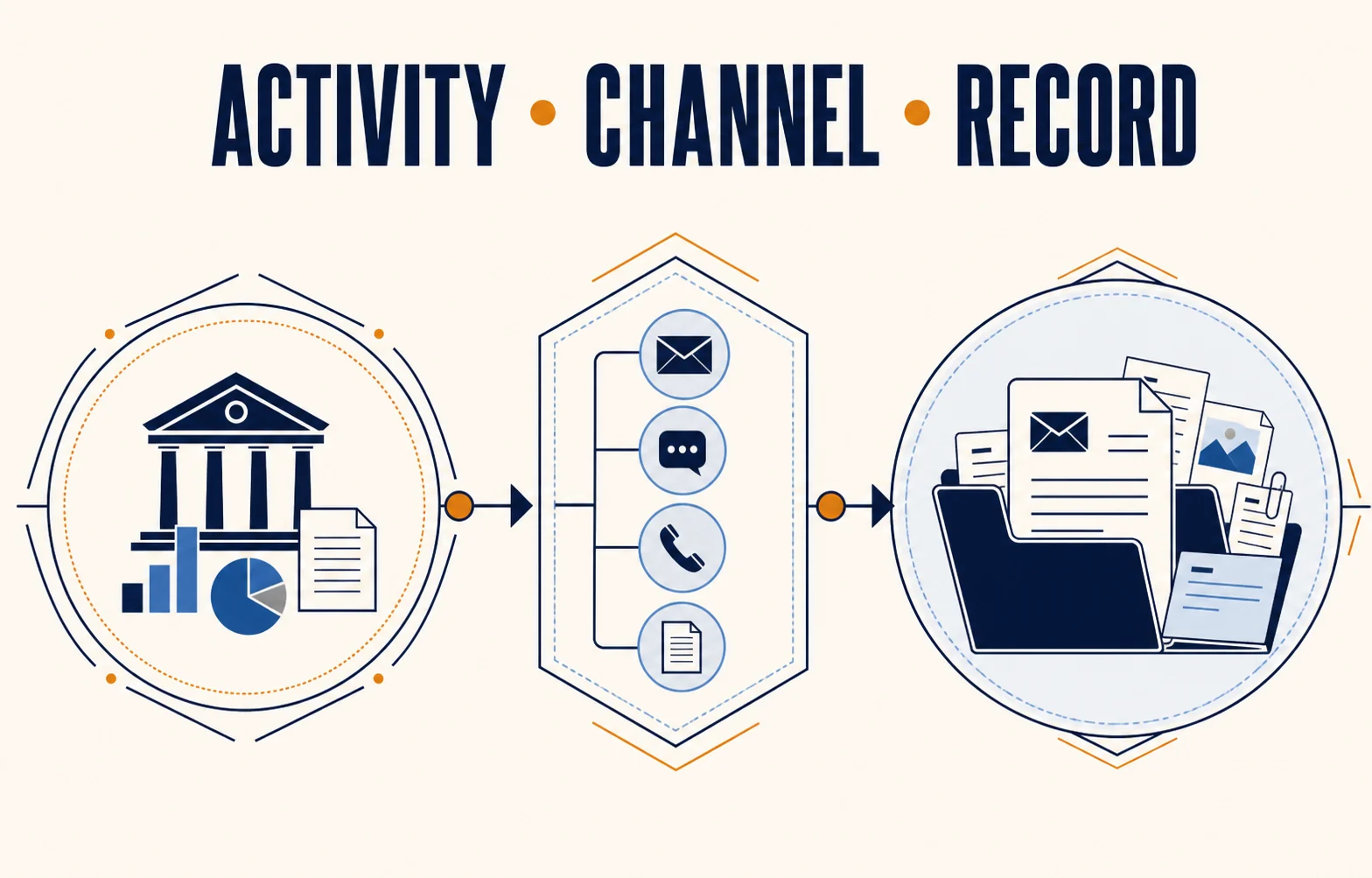







The Patrina approach
Investment adviser records can span communications, files and the systems that support client services. A usable archive keeps those records searchable while preserving the context needed to understand and retrieve them.
Patrina’s compliant archiving capabilities bring indexing, preservation, search, permissions, review tools, reporting and audit trails into a connected recordkeeping workflow.
Let the Patrina team work with your compliance departments to develop indexing suited to each record type. The archive can reflect the firm’s record classes, approved sources, covered personnel and account structure.
A defined record map gives authorized users a more direct path to the information they need for review and retrieval.
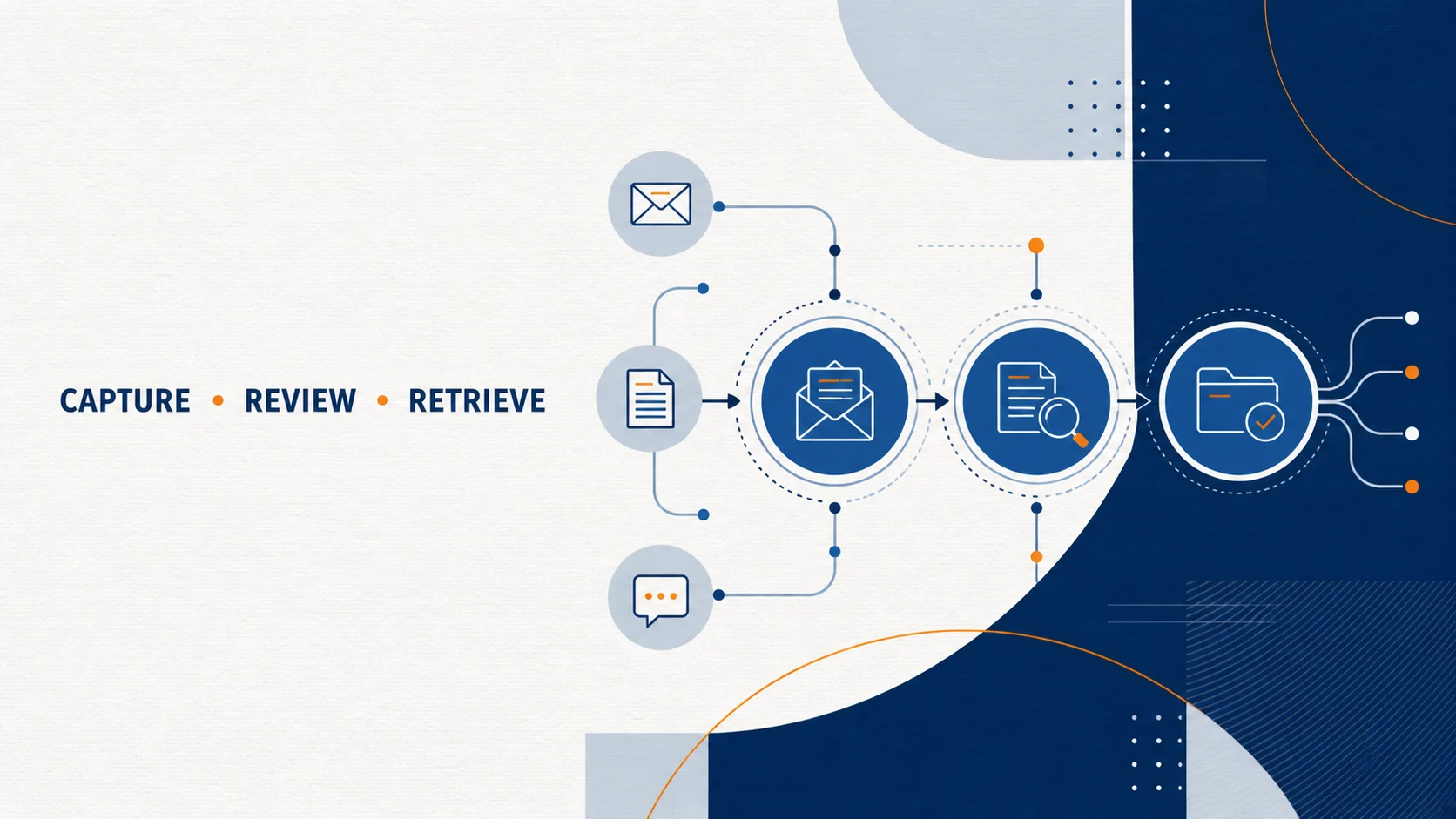
Records are more useful when people, dates, sources and related material remain connected. Patrina’s indexing and searchable access help authorized users retain that context when reviewing files or communications.
Files can be organized through relevant indexes, while archived communications retain searchable message information for focused review.
With Patrina’s flagging lexicons, sampling, follow-up flags, review assignments, permission controls, escalation, audit trails and reporting, compliance workflows become clear.
These tools help firms assign records for review, track follow-up and maintain visibility into completed activity across the authorized team.
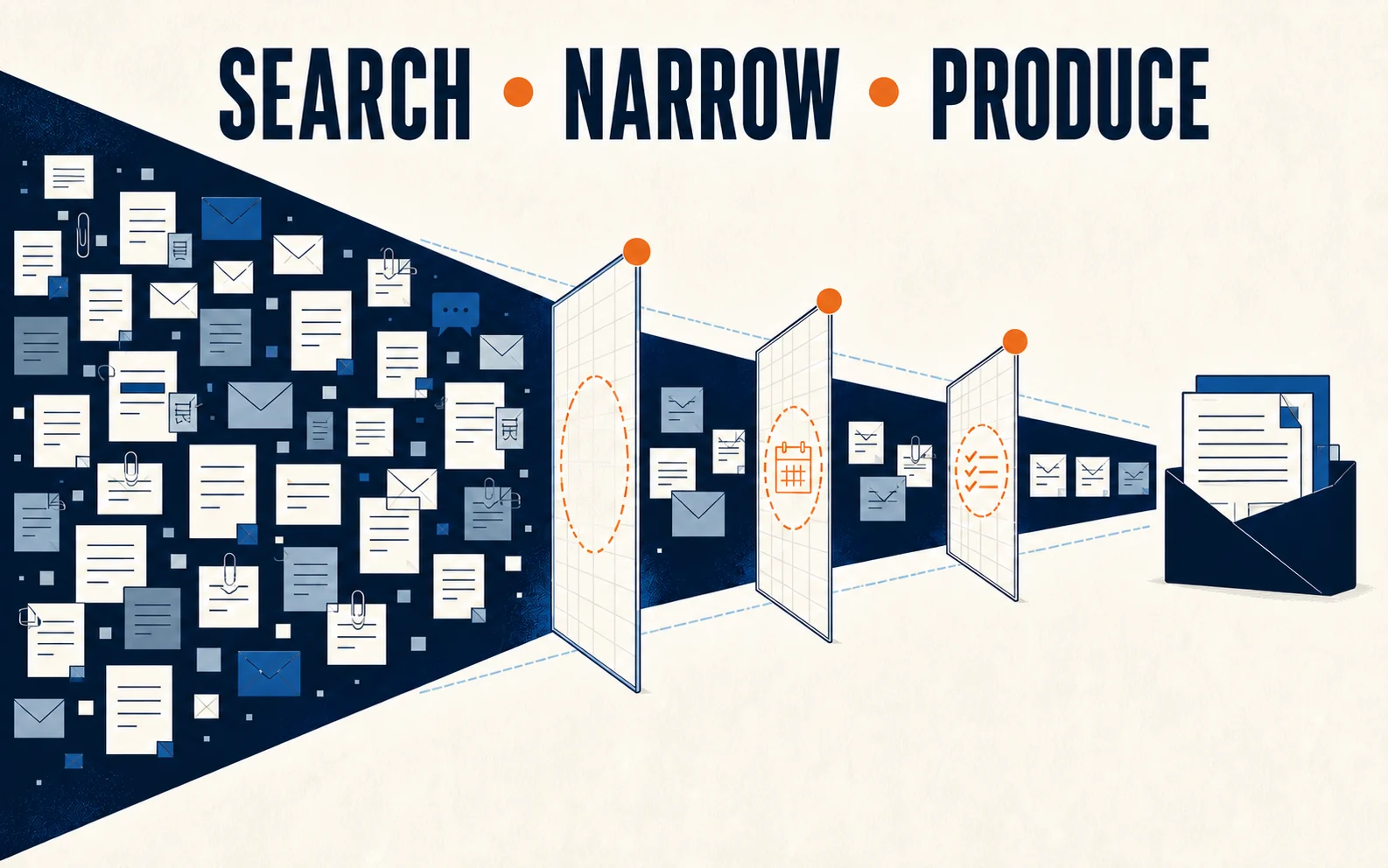
Searchable access helps authorized users move from the language of a request to a focused set of relevant records. Reviewers can work within defined permissions while maintaining the context needed to evaluate those records.
Patrina’s team can assist with producing records needed for examiner requests, providing a practical path from archived information to responsive production.
Does your firm have historical data sitting with another provider? Patrina can help RIAs bring prior email records into the searchable archive.
Bringing historical communications into the same environment can make older records easier to locate when a review or request extends beyond recent activity.
“We use Patrina primarily to help us monitor email communication between the advisor and the client. In addition, we find Patrina useful in helping us monitor external text messaging.”
Joel A. Diaz
Managing Member, Anchored Wealth Management
Capabilities for an adviser recordkeeping workflow
Evaluate the retrieval design by asking which fields identify a record, which come from the source, which can be configured and whether the same search logic remains available after migration.
Patrina’s archiving software provides targeted and full indexing capabilities, saved search criteria and repeatable searches for quick retrieval. These capabilities can help reviewers move from individual queries to consistent review and retrieval processes.
Ask Patrina to demonstrate the available search fields and how saved searches behave as the archive grows.
Automated compliance review capabilities include percentage sampling, message flagging, follow-up, review assignments, reassignment and escalations.
Validate how these tools fit the firm’s written review program and how completed actions remain connected to the underlying records.
Test access against actual roles, such as compliance officers, delegated reviewers, technology administrators and outside consultants. Confirm who can search, review, export, change policies and access sensitive content.
An audit trail becomes more useful when you can connect recorded activity to the review, record or workflow it supports. Audit trails and reporting capabilities can help you document activity associated with reviews and regulatory requests.
Ask to see which user and system actions are recorded, how those events connect to specific records or review activity, and how you can report or export that information.
Validate that the available audit history provides the traceability, access controls and documentation you need for your review and recordkeeping procedures.
Legacy-message import can bring historical communications into the searchable archive, while production support can help move relevant records from the archive into a response for an examiner request.
Before relying on these capabilities, confirm accepted formats, metadata preservation, validation steps, volume limits, responsibilities, output formats and commercial terms.
Define the record classes, channels where each record may originate, source owners and approved preservation requirements before evaluating archive interfaces.
Use that record-to-channel matrix to test whether the proposed archive covers the firm’s intended scope and identify unmapped sources before focusing on search screens.
Coverage starts with scope
A channel inventory tells you where people communicate. It does not, by itself, identify which communications, files or other records belong in the firm’s recordkeeping program.
An advisor may discuss a recommendation by email, respond through an approved messaging platform, publish content on social media or store supporting material in a file repository. The record’s content, business purpose, applicable requirements and firm policy determine how it should be handled.
Build a record-to-channel matrix before evaluating integrations. Identify the business activity, record type, source system, responsible owner and required preservation process.
Patrina provides archiving and review capabilities for channels including Microsoft Exchange, Office 365, Google Mail, Microsoft Teams, Slack, Dropbox, AWS, Google Drive, LinkedIn, Facebook, Instagram, X, YouTube, Vimeo, Yammer and Bloomberg.
During your initial scoping, confirm the connection method, account types, message elements, attachments, edits, deletions, identities, historical data and current availability.
















The investment-adviser recordkeeping reality
The recordkeeping decision becomes harder when the channel list comes before the firm defines what it needs to preserve.
Start with the business activity and identify what should be preserved across email, text, social and other sources. Then define where the record originates, how it is indexed, who can review it and how an authorized user can retrieve and produce it later.
Two messages from the same application can have very different recordkeeping significance. One may be routine scheduling; another may involve advice, a recommendation, movement of funds or securities, or advertising.
The reverse is also true: one business activity can generate an email thread, attachment, social post and supporting file. Simply connecting a mailbox does not establish that the complete record is represented.
Broad keywords can return too much, while narrow terms can miss records described differently.
Real requests often combine people, dates, accounts, topics, channels and record types. An effective archive therefore needs reliable identity, timestamps, source context, indexing, permissions and a reviewable search process.
Without that context, teams may still depend on employees to remember where a conversation occurred.
New advisors, messaging preferences, social accounts, acquisitions and historical data can all change the boundaries of the archive.
Keep the approved-channel policy, account inventory, capture configuration, retention treatment and review ownership aligned as the business changes. Otherwise, written procedures and technical controls can gradually diverge without an obvious system failure.
Bring a representative recordkeeping scenario to a Patrina demo. Ask the team to trace the activity from its source through capture, indexing, review, retention and retrieval.
Use the exercise to identify what Singular or Patrina supports, what requires configuration and where the firm must define its own procedures.
Use a real handoff to evaluate fit, ownership and visibility.
Investment-adviser archiving use cases
You want to add a messaging or collaboration channel that is not yet part of your approved communication environment.
Compliance, the business owner, technology administration, affected advisers and the implementation team.
You can make a documented go, conditional-go or no-go decision based on demonstrated capture and retrieval. Your archive scope and communication policy stay aligned before the channel is adopted.
An examiner, internal reviewer, counsel or complaint investigation requests communications related to a client, recommendation, topic or period.
Compliance, authorized reviewers, counsel when applicable, business personnel familiar with the request and support personnel when needed.
You have a repeatable path from a request to a focused production while retaining responsibility for defining scope and determining which records are responsive.
You prepare an advertisement or performance presentation supported by communications, reports, worksheets or stored files.
Marketing, compliance, investment or performance-data owners and records administration.
You can evaluate the record taxonomy across communications and supporting materials rather than treating archiving as a simple channel checklist.
Regulatory context in operating terms
For an investment adviser registered or required to be registered with the SEC, Advisers Act Rule 204-2 identifies multiple categories of books and records.
The recordkeeping obligation extends beyond “all email.” Depending on the applicable provision and activity, records can include specified written communications, advertisements and related materials, records supporting performance presentations, agreements, policies and other records connected to the advisory business.
The applicable record, retention and production requirements depend on the relevant rule provision, business activity and facts of the firm.
Rule 204-2(a)(7) addresses written communications received and sent that relate to specified subjects, including advice or recommendations, funds or securities, orders and certain performance information.
Other provisions address advertisements, testimonials or endorsements, performance substantiation, policies, agreements and additional books and records.
Map each applicable record class to its source and owner rather than assuming every message has the same significance or that records created outside email are irrelevant.
Rule 204-2(g) permits electronic storage subject to specified conditions, including requirements addressing:
Reasonably ensuring that electronic reproductions of nonelectronic originals are complete, true and legible when retrieved.
In its 2001 electronic recordkeeping release, the SEC stated that it was not adopting a non-rewritable, non-erasable or WORM-format requirement for investment advisers and investment companies. That differs from the broker-dealer electronic-recordkeeping framework.
Non-rewritable media may still form part of a vendor’s preservation architecture, but Rule 204-2 does not impose a universal WORM requirement on investment advisers.
Evaluate Patrina’s preservation approach against the record types, activities and rules that apply to your advisory business.
Rule 204-2 contains different provisions and timing requirements for different records. A single blanket retention statement should not replace a record schedule tied to the applicable requirements.
If you are subject to state investment-adviser requirements, evaluate the rules of each relevant state rather than assuming the federal framework applies in the same way.
If you are dually registered or affiliated with a broker-dealer, evaluate the additional recordkeeping regimes that apply to those activities. Those requirements do not automatically make every advisory record a broker-dealer record.
Regulatory Context
Recordkeeping requirements depend on your registration status, activities, records, policies and applicable federal or state law. This content provides general information and is not legal advice.
Validate your final record map, retention schedule, storage approach and regulatory language with Patrina, your compliance professionals and qualified counsel.
Choosing an adviser archive
Start with your record taxonomy—not a generic feature list or a single message. Build a matrix that connects each record class to its source, business owner, regulatory or policy basis and expected evidence.
Use that map to test whether the proposed archive can support your recordkeeping process as sources, responsibilities and business activities change.
Can you document each record class with its source, business owner, regulatory or policy basis, covered population, preserved elements, known exclusions and validation evidence?
A connection list is only one part of the map. For each record class, identify where it is created, who owns it, why it belongs in scope, which users or accounts are covered and what evidence confirms that the source is operating as intended.
The matrix should expose records that originate across multiple sources and sources that lack a clearly assigned record owner.
Using a representative request, can an authorized reviewer search every in-scope source, apply the available filters, save the criteria and document the resulting review decisions?
Test more than full-text search. Evaluate participants, dates and times, sources, attachments, record types, and client or account identifiers where supported. Confirm that search criteria can be repeated when similar requests arise.
A cross-source result set is useful when you can see where each record originated, refine the population without losing context and retain the search criteria and review history.
When you add a communication channel or record class, which approvals, technical tests and evidence update the matrix before launch?
New channels, services, acquisitions and policy changes can quickly make an otherwise accurate record map incomplete.
Define who approves a new record class or source, who validates the technical connection, how retention and access decisions are documented, and how unresolved gaps are recorded before the channel or activity is broadly used.
For each record class, determine who owns the source, validates the coverage, reviews content, approves policy changes and resolves exceptions—and what can each role see or change?
The person who creates a record, system owner, retention-policy owner and reviewer may be different. Define each responsibility by record class and establish who resolves exceptions when a source, identity or classification is unclear.
Align permissions with those responsibilities and the reviewer roles approved for your firm.
What evidence lets you compare the approved record map with actual archive activity, and how are gaps assigned, investigated and closed?
An inventory is useful only when you can detect drift. Compare expected users, accounts, sources and record classes with observed archive activity.
Define the report, exception register or periodic control that identifies a silent source, newly added team or record class without evidence of capture.
Bring your approved record map to the demo and evaluate Patrina against the sources, owners and retrieval scenarios it contains.
Bring one real client or record journey and ask Patrina to show how the platform supports it.
Archiving software for investment advisers preserves and organizes defined business records so authorized users can search, review, retrieve and produce them when needed. Depending on the product and configuration, those records can include communications, files and other electronic records.
Long-term storage is only part of the process. A useful archive also preserves context, applies approved retention rules, controls access and supports responses to operational, legal, compliance and regulatory requests.
Rule 204-2 covers multiple categories of books and records for advisers registered or required to be registered with the SEC. Examples include:
The applicable records and retention requirements require paragraph-by-paragraph analysis from your compliance or legal team. This summary should not be treated as a universal checklist.
Review the matrix when you approve a new communication channel, add a service or record type, acquire a team, change a material source, modify a policy, change registration scope or identify an unmapped record during testing or a request.
Assign an owner and evidence requirement to each update. Compliance or legal professionals should determine when regulatory or policy changes require a revised record class or retention treatment.
No universal WORM requirement applies to investment advisers under Rule 204-2. The SEC’s 2001 electronic-recordkeeping release stated that it did not adopt a non-rewritable, non-erasable or WORM-format requirement for investment advisers and investment companies.
Rule 204-2’s electronic storage provisions instead address indexing, prompt access and production, duplication, safeguards, authorized access and faithful reproduction.
A platform may use WORM or another preservation architecture, but that technology should not be presented as a universal Rule 204-2 requirement.
Potentially, but channel support alone does not establish complete coverage. Confirm the product and configuration used for each channel, including the connection method, account coverage, preserved content, identities, attachments, edits, deletions, historical import, failure handling and search behavior.
Coverage can vary by platform and configuration, so test each source against the firm’s record map.
RIA email archiving focuses on the mailbox lifecycle: connecting approved mailboxes, preserving email and attachments, reviewing messages, searching correspondence and producing email records.
Archiving software for investment advisers takes a broader record-first approach. It maps record classes to the approved sources where related evidence may appear, including email, messaging, social content, collaboration tools and files.
If you only need email, evaluate an email-focused solution. If your records span multiple channels, evaluate the broader record map.
A state-registered investment adviser should evaluate the books-and-records requirements, examination expectations and guidance of each relevant state regulator. The federal Rule 204-2 framework may not apply unchanged.
If you operate across states or change registration status, consider how those changes affect record scope and retention configuration. Let Patrina document technical capabilities, while relying on qualified compliance professionals or counsel to determine the requirements that apply to your business.
See Patrina archiving in action
Bring a real process to the conversation. A focused demonstration can show the relevant product path, clarify configuration questions and identify what your team should validate next.